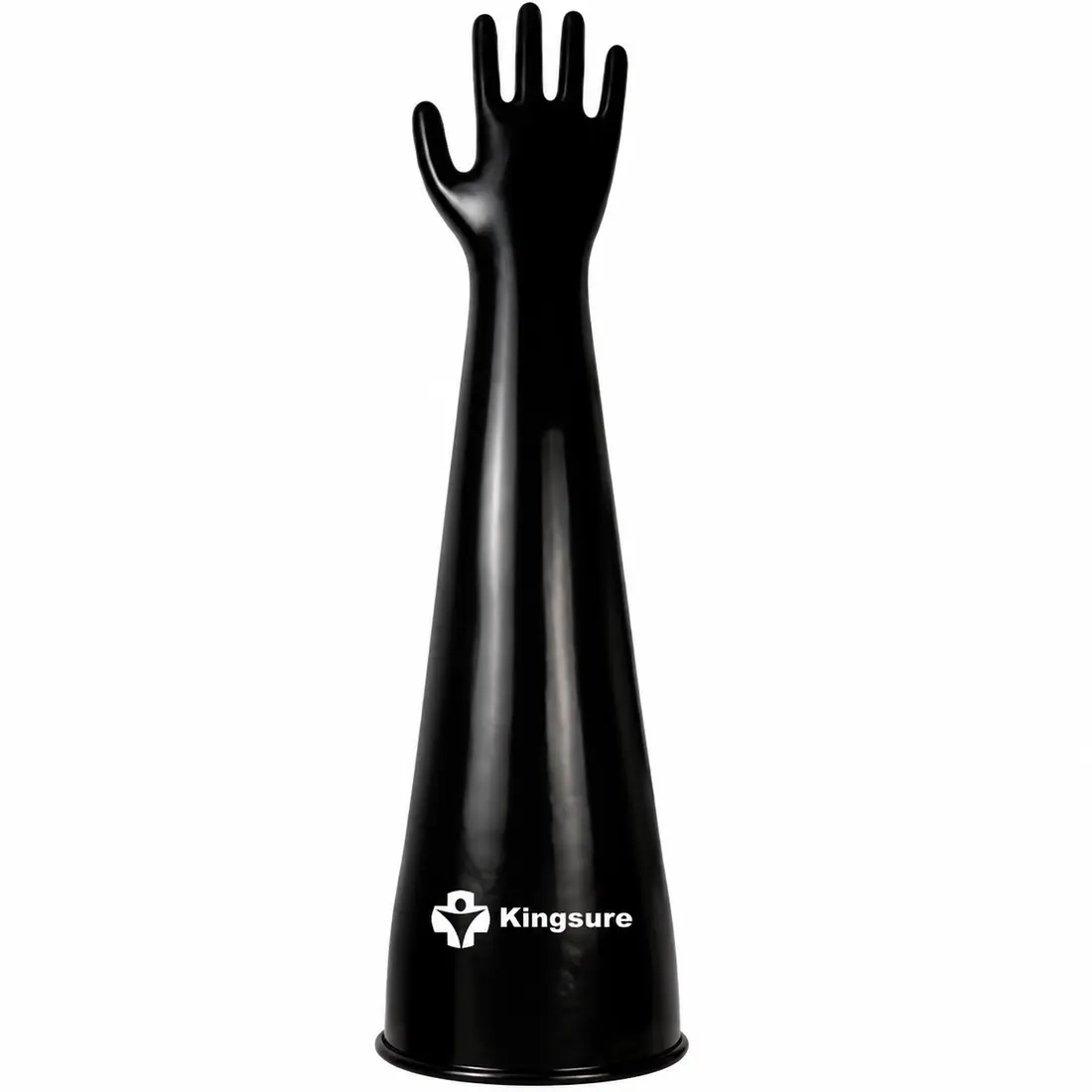
Compare temperature range, sterilization compatibility, chemical duty and barrier performance before choosing a glove material.
Quick answer
There is no single best isolator glove material. EPDM is often selected for repeated sterilization and broad chemical duty, CSM for a balanced white glove with versatile chemical resistance, and Butyl when gas and vapor barrier performance is the priority.
Start with the process, not the material name
The correct choice depends on what the glove will contact, how it will be sterilized, the operating temperature, the required barrier and the expected service cycle. A material that performs well in one environment may be unsuitable in another.
Practical rule Confirm the complete process conditions before confirming the glove specification. Final compatibility should be validated under the customer’s actual cycle and media.
Quick material comparison
Factor EPDM CSM Butyl Typical selection priority Repeated sterilization and broad chemical duty Balanced chemical resistance and white appearance Gas and vapor barrier Kingsure temperature range −50 to 135°C −35 to 120°C Confirm by configuration Repeated autoclave reference Up to 150 cycles Up to 60 cycles Validate the actual cycle Primary barrier characteristic Heat, oxidizer and broad chemical resistance Oxidizers, acids, alkalis, alcohols and oils Low gas and vapor transmission
When EPDM is a strong candidate
Kingsure KS5000 EPDM is designed for temperatures from −50 to 135°C and can support VHP, ozone and gamma sterilization. Under qualified conditions, it can withstand up to 150 autoclave cycles.
- Processes with frequent sterilization cycles
- Exposure to strong acids, alkalis or oxidizing media
- Applications requiring a wide operating-temperature window
When CSM is a practical balance
Kingsure KS2000 CSM provides a white glove option with resistance to oxidizers, acids, alkalis, alcohols and oils. Its stated temperature range is −35 to 120°C, with up to 60 autoclave cycles under qualified conditions.
- A white glove is preferred for visual management
- The process involves varied chemical media
- A balanced combination of flexibility and resistance is required
When Butyl barrier performance matters most
Kingsure KS1000 Butyl is intended for applications where low gas and vapor transmission is critical. It is commonly considered for gloveboxes handling gases, solvents or radioactive iodine, subject to application-specific validation.
Do not select by material alone Concentration, contact time, temperature and sterilization history can all change real-world performance.
Information to confirm before selection
- List every process medium and its concentration.
- Define sterilization method, temperature and cycle frequency.
- Confirm glove-port diameter, thickness and length.
- State whether gas, vapor or permeation performance is critical.